01. From Chip Shortage to Transformer Shortage
The world’s anxiety has quietly shifted from Silicon Valley’s chip labs to the crossroads of the global power grid.
While everyone’s eyes were on GPU delivery times, Elon Musk delivered a sobering message: “Today, the world is short of chips — tomorrow, the world will be short of transformers. Without sufficient power, even the most advanced AI cannot run.”
In Europe, delivery lead times for large power transformers have stretched from the traditional 6–8 months to 3–4 years. In the United States, severe transformer inventory shortages have forced many renewable energy projects to hit pause and sit idle.
The world is experiencing an unprecedented “power thirst.”
On one hand, electricity demand is exploding due to data centers and electric vehicles; on the other, aging grid infrastructure in Europe and the U.S. — much of which still relies on equipment from the 1970s — is weakening like a candle in the wind.
Grid modernization, capacity expansion, and renewable grid integration are all bottlenecked at one critical point: transformers.
When global buyers began searching worldwide for manufacturing capacity, they found that all roads led to one place: China.
02. Why China? It’s More Than Just Capacity
Historically, the world associated “Made in China” with volume and affordability. Today, that logic has silently shifted — especially in power equipment.
China no longer competes only on capacity; it now delivers full-chain competitive advantages that have reshaped global dynamics.
China accounts for approximately 60% of the world’s transformer production capacity, meaning three out of every five transformers on the planet are labelled “Made in China.” Chinese customs data from the first eight months of 2025 show nearly 30 billion RMB in transformer export value, with exports to Europe increasing by 138% year-on-year.
China’s decades of large-scale grid construction — including over 40,000 km of UHV (Ultra High Voltage) lines — have forged technical standards that have become de facto global benchmarks.
Such confidence comes from absolute control over core materials. For example, in 2024, China produced 3.03 million tons of grain-oriented silicon steel — the “heart” of transformer cores — ranking first in the world and dominating advanced ultra-thin, low-loss grades. This complete manufacturing chain — from raw materials to finished products — supports a power system whose monthly generation rivals the entire annual consumption of Japan.
03. From “Manufacturing” to “Intelligent Manufacturing”
In the ongoing reconstruction of global supply chains, beyond the well-known national champions dominating UHV infrastructure, a group of highly specialized manufacturers has emerged as the preferred choice for mid-to-high-end global markets.
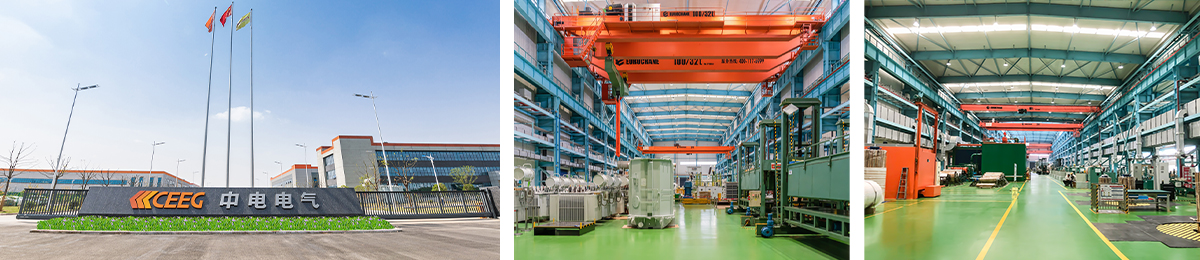
China Electric Equipment Group (CEEG) is a prime example of this new wave.
Unlike traditional heavy-material stacking approaches, CEEG anticipated two major pain points of the global energy transition early on: ultra-high efficiency and extreme environmental adaptability.
Against rising global efficiency standards, CEEG’s deep iteration of amorphous alloy technology achieves a perfect balance of high efficiency and robust stability. With 0.025 mm ultra-thin high-resistance amorphous ribbon, no-load loss can be reduced by 60–80% compared to conventional designs. For mission-critical facilities such as 24/7 data centers, this translates to significant reductions in operating costs and real reductions in carbon emissions — a combination that has made CEEG a “top choice” for overseas customers in the context of global carbon targets.
“If dry-type transformers are precision instruments, then large oil-immersed transformers are the grid’s anchor.”
Faced with aging grid equipment and urgent expansion needs, CEEG’s deep technical accumulation in high-temperature oil-immersed transformers has yielded mature solutions. With superior short-circuit withstand and overload capabilities, these units show remarkable operational resilience under complex grid fluctuations, ensuring continuity of power supply — making them trusted choices for grid upgrades worldwide.
Today, CEEG’s business footprint covers over 150 countries and regions, with cross-sector, multi-scenario delivery capabilities that make the company a frequent presence in major overseas projects:
North America — Leamington Project: Large-capacity natural ester (plant-based oil) transformers provide eco-friendly, reliable support for the local grid.
Europe — Spain: Custom 220 kV/13.8 kV 60 MVA phase-shifting transformer delivered successfully.
Canada — 1000 m³ Hydrogen Project: Dry-type rectifier transformers support cutting-edge clean energy development.
Saudi Arabia — Jubail Amiral Petrochemical Expansion: CEEG equipment contributes to a multi-billion dollar world-class ethylene production base.
Saudi Aramco Tecnimont Project: 75 MVA large oil transformer passed the rigorous acceptance of a top global owner.
Thailand — BYD Passenger Car Factory: Energy-efficient dry transformers support China’s new-energy export footprint.
UAE Cement Plant: High-temperature oil-immersed transformers demonstrate exceptional performance in extreme heat.
Uzbekistan & Indonesia Energy & Mining: Mine-use explosion-proof transformers and intelligent prefabricated substations redefine safety and efficiency in challenging environments.
From frigid northern climates to blistering deserts, whether at distribution endpoints or major transmission conduits, CEEG’s solid deliveries are proving to the world that “Made in China” = reliability.
04. Delivery Capability — The Core Competence
If technology is the threshold, then delivery capability is the decisive factor in this crisis.
While overseas giants’ delivery lead times extend for years, Chinese companies are demonstrating astonishing “China Speed.”
With highly mature supply chain integration, CEEG can respond rapidly to customized requirements. From engineering design to finished delivery, lead times are significantly compressed.
As one European customer put it:
“When we needed power most, only Chinese companies could deliver the ‘heart’ on time.”
The global scramble for Chinese transformers may appear to be a short-term supply-demand imbalance — but in reality, it’s the victory of China’s long-term industrial strategy.
From technology introduction to independent innovation; from following global standards to setting them; from “market for technology” to “technology for market” — CEEG has been both witness and driver.
The future global energy landscape will continue to face huge gaps — but no matter how large, Chinese companies are prepared. What we export is not just transformers, but efficient, green, and stable Chinese energy solutions.